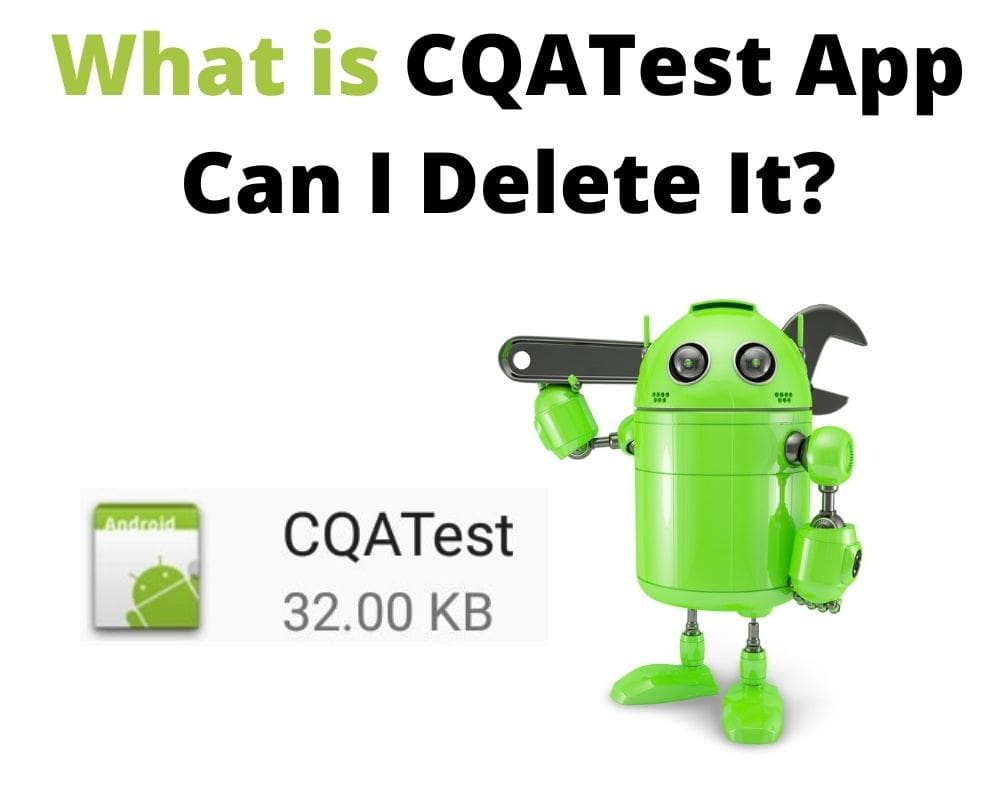
CQATest is one of those Android system apps people notice only after something feels off. It may appear in the app list without an icon, surface in battery usage, or show up after a repair or update. Because it looks unfamiliar and offers no interface, many users assume it is safe to remove.
That assumption is understandable and wrong. CQATest is not bloatware, spyware, or a leftover user app. It is a system-level diagnostic component tied to how Android hardware is validated and tested.
This article explains what CQATest actually is, why it exists on some phones, why users suddenly notice it, what behavior it can cause, and how to handle it safely without damaging the system.
What CQATest actually is
CQATest stands for Certified Quality Auditor Test. It is a built-in diagnostic application used by manufacturers and service centers to verify hardware components during testing and repair workflows. The app is part of the system image on many Motorola and Lenovo devices and appears on some other OEM builds as well.
CQATest does not function like a normal app. It has no launcher icon, no user-facing interface, and no independent purpose outside testing and validation. When it runs, it does so under system control rather than user interaction.
Because it is embedded into the firmware, CQATest is treated as a system app. Android does not expect users to open, configure, or manage it directly.
Why CQATest exists on Android devices
Modern Android devices rely on automated and semi-automated testing to validate hardware. Sensors, radios, microphones, speakers, touch panels, cameras, and charging systems must pass checks both during manufacturing and after servicing.
CQATest is part of that validation layer. It provides structured test routines that technicians and automated systems can trigger to confirm hardware behavior. Once testing is complete, the app is expected to remain dormant.
The key point is that CQATest is not added for everyday phone usage. It exists so the device can be tested reliably before reaching the user or after repairs.
Why users suddenly notice CQATest
Most users never see CQATest at all. When it becomes visible, it is usually because something disrupted its expected dormant state.
The most common triggers include firmware updates, factory resets, incomplete system updates, or repairs performed by a service center. In these cases, the testing flag that keeps CQATest hidden or inactive may not reset correctly.
When that happens, CQATest can appear in Settings under Apps or Battery usage. On some devices, it may briefly display notifications or register background activity even though no testing is actively happening.
This visibility does not mean the app turned malicious or started spying. It means the system did not fully return CQATest to its inactive state.
What behavior CQATest can cause
When CQATest is inactive, it consumes no noticeable resources. It does not access personal data, transmit user content, or interact with apps. Its permissions are tightly scoped to hardware testing functions.
If CQATest remains partially active, users may observe battery usage entries, background process listings, or occasional system notifications. These symptoms are usually passive and do not indicate damage or data risk.
Importantly, CQATest does not cause long-term performance degradation on its own. If battery drain or instability is present, the root cause is typically the system state that left CQATest exposed, not CQATest itself acting independently.
Can you remove CQATest from Android?
No. CQATest should not be removed.
Because it is a system-level diagnostic component, removing or force-uninstalling it can break device testing workflows and, in some cases, interfere with hardware validation routines. On certain models, removal attempts can trigger boot issues or persistent system errors.
Methods that claim to remove CQATest usually rely on unsupported actions such as ADB removal commands or system partition modification. These approaches do not solve the underlying state issue and introduce real risk.
Android includes CQATest as part of the firmware for a reason. The correct approach is not removal, but restoring the system to a state where CQATest remains inactive.
Is CQATest spyware or a security risk?
CQATest is not spyware.
It does not monitor user activity, record personal data, or transmit information externally. Its purpose is limited to internal hardware diagnostics and validation routines. When inactive, it does nothing at all.
The confusion comes from visibility. Users tend to associate unknown system apps with threats, especially when those apps have no icon or description. In this case, visibility reflects a system state issue, not malicious behavior.
From a security perspective, CQATest is safe. From a stability perspective, it should simply remain out of the way.
How to handle CQATest safely
In most cases, no action is required. If CQATest is visible but causing no issues, leaving it alone is the safest option.
If the app appears active after a repair or update and you want to return the system to normal behavior, there are safe ways to address the situation without removing anything.
Start by understanding that the goal is not to disable testing permanently. The goal is to allow Android to return CQATest to its expected dormant state.
Safe steps to return CQATest to inactivity
If CQATest appears active or visible, the following steps can help restore normal behavior. These actions do not remove the app and do not alter system partitions.
- Restart the device fully. This clears temporary system states and often resolves testing flags left active after updates or servicing.
- Check for pending system updates. Install any available firmware updates, then restart again. Incomplete updates commonly leave diagnostic components exposed.
- Clear system cache (see how to clear system cache on Android) through recovery, if supported by your device. This resets cached system data without affecting user files and can correct post-update state issues.
- Perform a standard factory reset only if the device shows broader system instability and after ensuring important data is backed up. This should be a last resort and used only when other system-level issues are present, not just because CQATest is visible.
After these steps, CQATest typically disappears from app listings or returns to a fully inactive state.
When CQATest visibility matters
Seeing CQATest once is not a problem. Seeing it persistently alongside crashes, hardware malfunctions, or failed updates may indicate that the system did not complete a validation cycle properly.
In those cases, the issue is not CQATest itself. It is the incomplete system state around it. If safe resets and updates do not resolve the behavior, a manufacturer-authorized service center can reflash the firmware correctly.
That process restores both user-facing features and internal diagnostic states.
The important takeaway
CQATest exists to verify your device, not to watch you. It appears when Android’s internal testing state is exposed, not because something new was installed.
Removing it is the wrong instinct. Understanding why it exists and how to return it to dormancy is the correct response.
Once you know what CQATest does, its presence stops being alarming. It becomes a signal about system state, not a threat that needs to be eliminated.
Related articles