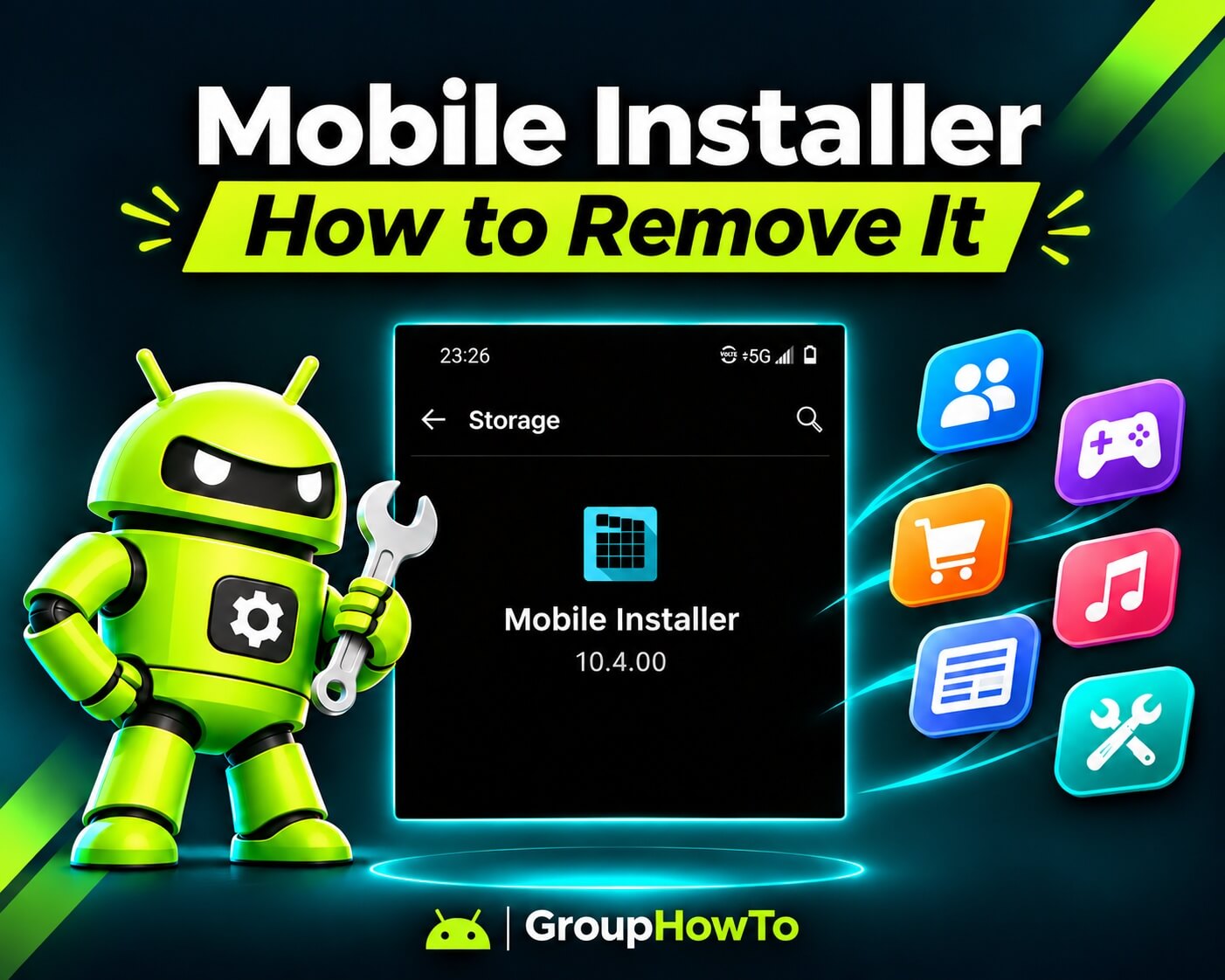
Mobile Installer is a carrier-managed Android application responsible for installing and updating software distributed by mobile network providers. Its package name is com.sprint.ce.updater, and it is associated with Sprint, T-Mobile, and SoftBank.
You may discover Mobile Installer among your installed applications without remembering downloading it. Unfamiliar apps appearing on your phone, recurring “Processing requests” notifications, or unexpected mobile data usage can also draw attention to it, particularly when Android does not offer an obvious way to remove it.
Why Is Mobile Installer on My Phone, and What Does It Do?
Before Sprint’s 2020 merger with T-Mobile, Sprint included Mobile Installer on its carrier-branded Android phones, and the package kept its original Sprint identifier afterward. SoftBank also distributed Mobile Installer for its App Pass service in Japan, as documented in a June 2018 support notice, but App Pass ended on December 20, 2022.
Mobile Installer provides a software distribution channel separate from Google Play. Its installation privileges depend on Android and the device’s firmware configuration.
Our inspection of version 10.9.50 identified background update services, scheduled maintenance components, a SIM-related job service, and receivers for system events. The APK also contains Sprint and T-Mobile server addresses, including mobileidpcm.sprint.com and mobilesolutionspcmprd.t-mobile.com, alongside a signing certificate with the subject Sprint Android Production Key.
Mobile Installer is not the only carrier application distribution service. Digital Turbine’s Mobile Services Manager also supports carrier app delivery, while T-Mobile’s AppSelector recommends applications during setup and relies on Google Play to manage selected apps afterward.
A separate application also named Mobile Installer is published by PassTime GPS for installing vehicle tracking equipment. Its package name, com.passtimeusa.Installer, distinguishes it from the carrier application discussed here.
Is Mobile Installer Safe, or Is It Bloatware?
Mobile Installer is a legitimate carrier application, not inherently malware or spyware. It can still be considered bloatware when it delivers unwanted applications that consume storage or network data without providing a service the user needs.
Our APK inspection found 56 requested permissions, including INSTALL_PACKAGES, DELETE_PACKAGES, and QUERY_ALL_PACKAGES. These permissions reflect its package-management role, although Android restricts installation and removal privileges according to the device’s security configuration.
How to Fix Mobile Installer Problems
Recurring notifications, unwanted installations, and excessive background data usage require different responses. The appropriate action depends on whether Mobile Installer is responsible.
The following instructions focus on Samsung Galaxy phones, although available controls vary by model, One UI version, and carrier firmware.
1. Fix a Mobile Installer Notification That Keeps Appearing
A recurring “Processing requests” notification can originate from Mobile Installer or another carrier component. Services such as Carrier Hub and MCM Client generate their own status notifications, so the sender must be identified before changing its settings.
- Identify the sender: Press and hold the notification to access its application information. For dismissed alerts, check Settings > Notifications > Advanced settings > Notification history, if history was already enabled.
- Interrupt the current activity: If Mobile Installer is identified, open Settings > Apps > Mobile Installer > Force stop and confirm. Check whether the same notification returns during normal phone use.
- Check for firmware updates: Open Settings > Software update > Download and install, or the equivalent update menu. Install any available update and check whether the notification returns.
Force stopping interrupts the current application process but does not prevent another carrier request from starting it again. If Mobile Installer continues generating notifications, disabling it can stop its normal background activity, provided the device permits it.
2. Stop Unwanted Apps From Installing
- Remove the unwanted application: Open Settings > Apps, select the application, and tap Uninstall if available.
- Check for recurring installations: If the application returns, review any installation notification or installer information provided by the device. Android does not consistently expose the responsible installer through Samsung Settings.
- Stop Mobile Installer if confirmed: If the available evidence identifies Mobile Installer as the source, follow the disabling procedure below and check whether the unwanted installations stop.
3. Reduce Mobile Installer Background Data Usage
Mobile Installer can consume cellular data in the background when downloading carrier applications or updates, even when you are not actively using the phone.
- Check cellular consumption: Open Settings > Connections > Data usage > Mobile data usage and select Mobile Installer.
- Restrict background usage: Turn off Allow background data usage. On supported models, this control also appears under Settings > Apps > Mobile Installer > Mobile data.
- Verify the change: Review Mobile Installer’s cellular consumption over a comparable reporting period to determine whether it has decreased.
How to Disable or Remove Mobile Installer on Android
Mobile Installer is commonly included in carrier firmware rather than installed as an ordinary downloaded application. Android restricts removal of some preinstalled packages, so the available controls depend on the device’s firmware and carrier configuration.
Disabling and uninstalling produce different results. Disabling prevents an eligible application from running without deleting it, whereas uninstalling removes the application when Android permits that operation.
1. Disable Mobile Installer Through Settings
- Open Settings > Apps.
- Locate Mobile Installer. If it is missing, enable Show system apps through Filter and sort or the three-dot menu.
- Select Mobile Installer and tap Disable, if available.
- Confirm Disable app.
The service can be restored from the same screen by selecting Enable.
2. Uninstall Mobile Installer Through Settings
- Open Settings > Apps > Mobile Installer.
- Tap Uninstall if Android provides that option.
- Confirm the removal.
- Return to the installed-app list and verify that the application has been removed.
If Android offers Uninstall updates instead, that option restores an eligible preinstalled application to its factory version. It does not delete the original package from the device’s firmware.
3. ADB Option for Advanced Users
If Disable and Uninstall are unavailable in Settings, advanced users familiar with Android Debug Bridge (ADB) can disable Mobile Installer or uninstall it for Android user 0 without root access.
Caution: Verify the package name before running either command, since disabling or removing the wrong system package can disrupt essential phone functions.
- Disable:
adb shell pm disable-user --user 0 com.sprint.ce.updater - Uninstall for user 0:
adb shell pm uninstall --user 0 com.sprint.ce.updater
To reverse a successful disable, run adb shell pm enable com.sprint.ce.updater. To restore a preinstalled package uninstalled for user 0, run adb shell cmd package install-existing --user 0 com.sprint.ce.updater.
Conclusion
Mobile Installer is separate from Android’s built-in Package Installer, so disabling it does not interfere with Google Play’s ordinary installation and update functions. Removing Mobile Installer also stops the carrier-specific installation tasks handled by that package.