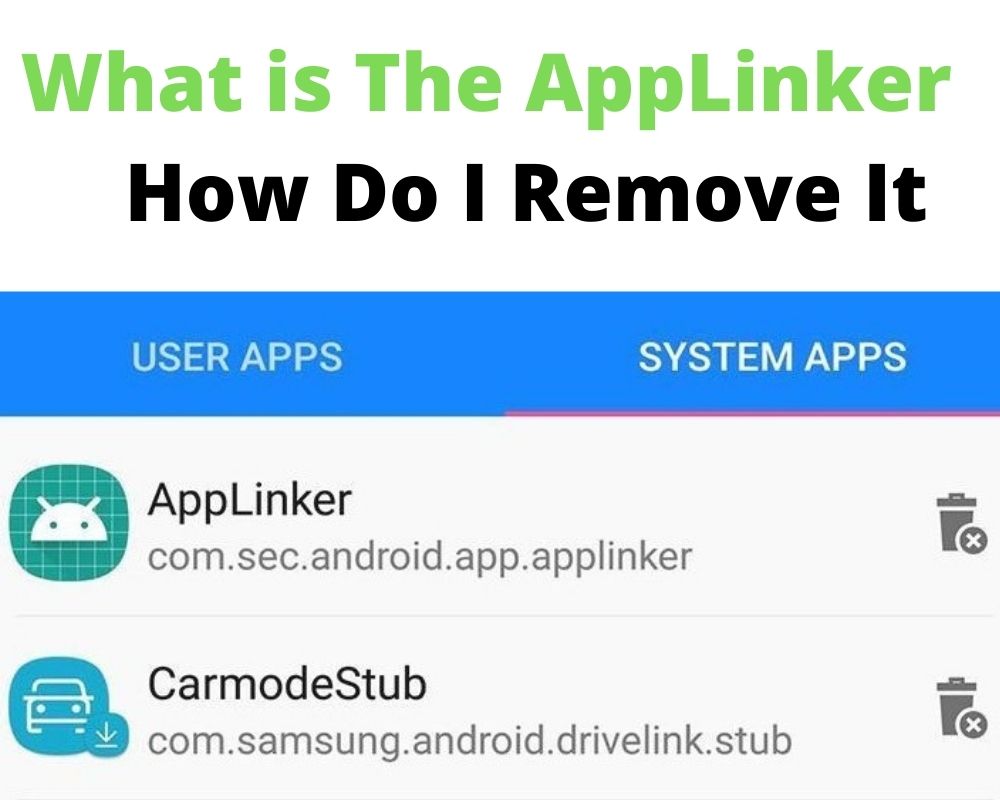
AppLinker can appear in the system-app list on a Samsung Galaxy device even though you never installed or opened it. Its name is easily confused with Android App Links, leading to incorrect explanations of what this Samsung component actually does.
What Is AppLinker on Samsung?
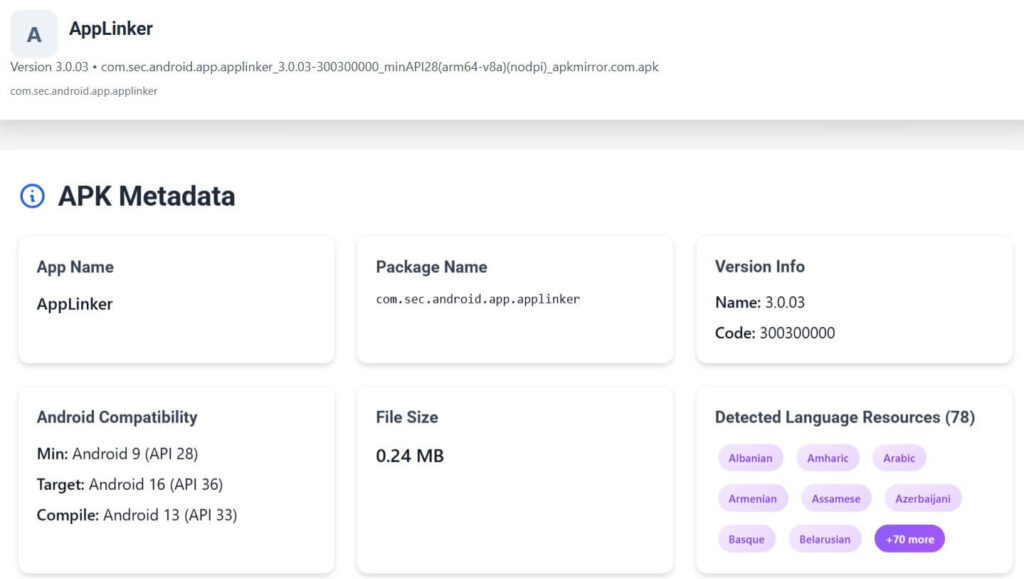
AppLinker is a preinstalled Samsung component identified by the package name com.sec.android.app.applinker. An examination of its version 3.0.03 APK confirms its role in maintaining firmware for compatible POGO-connected keyboard accessories.
A POGO keyboard connects through physical contacts on a tablet rather than ordinary Bluetooth pairing. These accessories contain electronics with their own firmware, so updating the tablet’s Android operating system and updating the attached keyboard are separate operations.
AppLinker has no ordinary app icon because its manifest does not declare a launcher activity. Users encounter it under Settings > Apps when system applications are displayed, or through a package viewer.
Despite the similar name, Samsung AppLinker is unrelated to Android App Links. Android’s verified web-link system relies on application intent filters and website association files to open supported links in matching apps.
How Does AppLinker Update Keyboard Firmware?
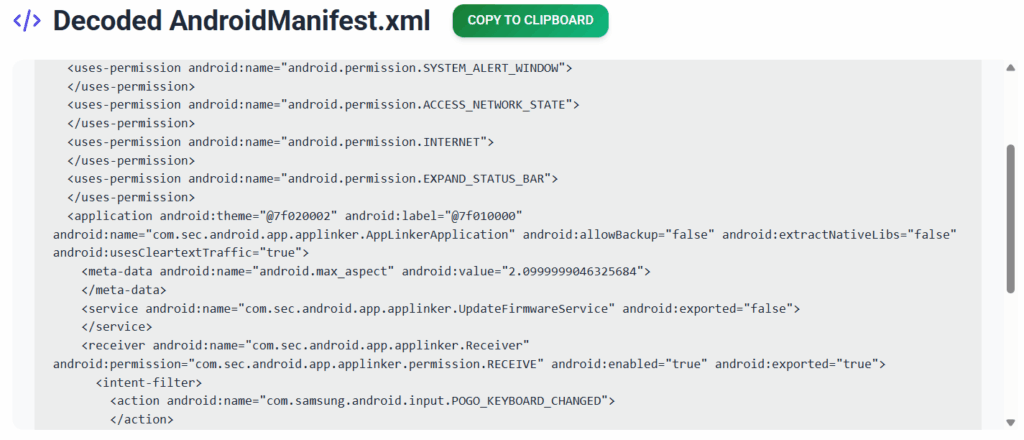
AppLinker declares a receiver for com.samsung.android.input.POGO_KEYBOARD_CHANGED. When the broadcast contains status=true, the receiver starts UpdateFirmwareService; when it contains status=false, it stops the service.
The service checks network availability and reads the keyboard’s installed firmware version through Samsung-specific system interfaces. It retrieves available firmware versions and download URLs from Samsung’s firmware service, including touch-controller firmware when the connected hardware reports that component.
When a newer firmware version is available, the service opens UpdateFirmwareActivity. The user receives an Update or Later choice, and the activity handles disconnected accessories, network errors, and insufficient battery charge before proceeding.
After the user approves the update, AppLinker downloads the firmware file and verifies its SHA-256 hash against the expected value. It then submits the update request through a kernel interface such as /sys/class/sec_keyboard/fw_update, allowing the device’s keyboard driver to handle the firmware transfer.
The examined code also contains device-specific hardware paths and a model check. These findings establish the firmware-update workflow in AppLinker, rather than identical functionality across every Samsung Galaxy device or AppLinker release.
Is AppLinker Safe, and What Permissions Does It Have?
AppLinker declares android.uid.system as its shared user ID, and package observations identify Samsung platform signing on devices containing the component. These details indicate its integration with Samsung system software and explain why it has privileges beyond those of an ordinary installed application.
Our examination of the AppLinker APK manifest identified four requested permissions: INTERNET, ACCESS_NETWORK_STATE, SYSTEM_ALERT_WINDOW, and EXPAND_STATUS_BAR. The first two support network communication and connectivity checks. SYSTEM_ALERT_WINDOW lets it draw over other apps, and EXPAND_STATUS_BAR lets it expand the status bar.
None of these four permissions is classified as a dangerous runtime permission. However, the permission list alone does not describe AppLinker’s complete access because it also operates under a system UID.
The manifest also declares an internal activity, a non-exported service, and an exported broadcast receiver protected by a custom permission. The receiver’s caller restrictions depend on how Samsung defines and grants that permission.
AppLinker has a documented security history. Samsung disclosed CVE-2022-30754, an implicit-intent hijacking vulnerability affecting AppLinker on Android 10, 11, and 12 before the July 2022 security maintenance release. Samsung addressed the issue by removing unused code, so keeping Samsung software updated is more appropriate than uninstalling the component.
Does AppLinker Drain Battery or Take Up Storage?
The AppLinker APK is approximately 243 KB. Installed storage usage also includes application data and depends on the device’s configuration.
AppLinker’s firmware-check workflow is triggered by keyboard connection events and involves network communication when checking for updates. The examined code shows this activity, but provides no measured evidence of excessive battery consumption, significant RAM usage, or device slowdown.
Should You Disable or Remove AppLinker?
AppLinker should not be removed simply because it appears among Samsung’s preinstalled applications. On devices supporting its keyboard firmware workflow, disabling or removing the component interrupts firmware checks and updates even though the connected keyboard can still operate with its existing firmware.
A standard Uninstall option is not available for every preinstalled system component. Root-based removal and ADB per-user uninstallation are unnecessary here, and removing a package for one Android user does not erase its original system APK.
What If a Keyboard Firmware Update Fails?
A failed keyboard firmware update does not automatically indicate a problem with AppLinker itself. The update process provides specific error messages that help identify what interrupted the operation.
- Reconnect the physical keyboard. Attach it securely and check that the tablet recognizes it under Settings > General management > Physical keyboard, where supported.
- Check the internet connection. Connect to a working network before retrying the firmware update.
- Charge the tablet to at least 15%. AppLinker blocks the firmware download when the reported battery level is below 15%.
- Check Samsung software updates. Open Settings > Software update > Download and install, install available updates, then reconnect the keyboard and check for its firmware update.
- Confirm the outcome. AppLinker displays a completion message after a successful firmware update.
Conclusion
A tablet’s operating system and its physical keyboard have separate firmware responsibilities, even when Samsung supplies both components. AppLinker’s connection-triggered update process explains how accessory maintenance takes place without requiring a conventional application that the user opens manually.
Related Articles