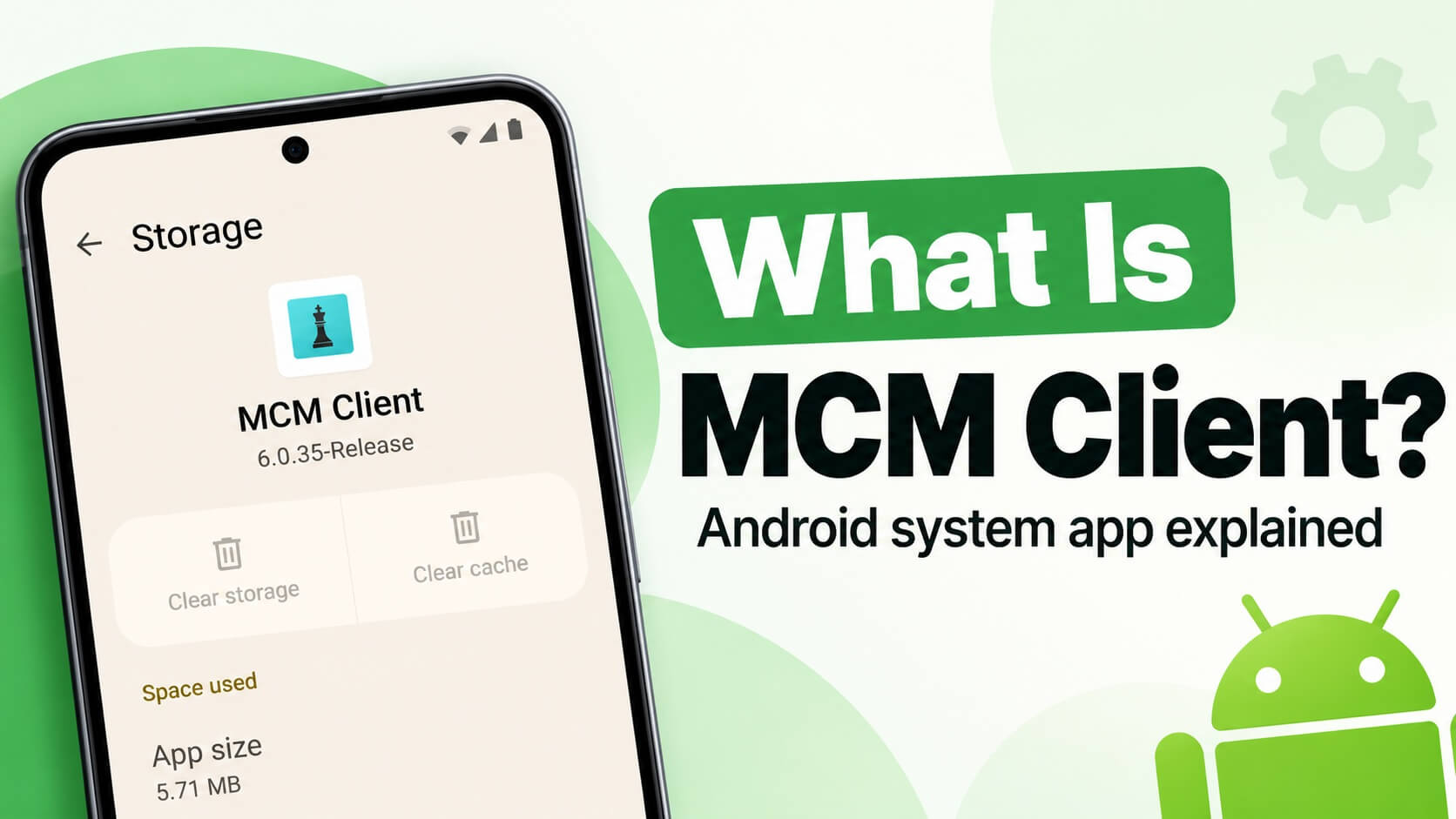
MCM Client is a carrier-related application found on certain Android phones, particularly devices associated with Sprint and T-Mobile. It handles background operations connected to carrier software, including application management and configuration requests.
The application often attracts attention when users discover it among their system apps or receive notifications about processing requests and downloading content. Some users have also reported unwanted applications appearing after carrier updates, raising questions about what MCM Client can install and whether it can be disabled or removed.
What Is MCM Client on Android?
MCM Client is an application distributed by Sprint under the Android package name com.sprint.w.installer. It belongs to the carrier software environment and includes components associated with Sprint and T-Mobile services.
The abbreviation MCM is commonly associated with Mobile Content Management, a term also used for enterprise systems that control access to corporate documents. Sprint’s MCM Client is a different implementation, so finding it on a personal phone does not mean an employer is managing the device.
To check for a work profile, look for briefcase badges on work apps or search for Work profile in Android’s Settings. These indicators help identify enterprise management of work apps, although a company-owned phone can also be managed without a separate work profile.
The application has received multiple releases over the years, including versions supporting newer Android systems. APKMirror’s release history lists version 6.0.51 from June 2026, while version 6.0.50, used for our APK analysis, requires Android 10 or newer. Earlier versions support older Android releases.
What Does MCM Client Do on Your Phone?
Our static analysis identified permissions associated with installing and uninstalling updates, monitoring package changes, and accessing network connectivity.
Its Android manifest references the carrier software packages com.sprint.ms.smf.services and com.tmobile.ms.smf.carrierhub. It also includes Sprint and T-Mobile integration components, although the manifest alone does not establish which operations are performed on every device.
Carrier-related application delivery is one reason users encounter MCM Client. In reports from Samsung Galaxy Note20 owners, users described the application downloading content while unwanted apps such as TikTok, Tidal, and games appeared on their phones.
MCM Client, Carrier Hub, and Mobile Installer are separate applications within the carrier software environment. Their roles overlap in carrier-related operations, but identifying the package responsible for an unwanted installation requires examining the installation source and the behavior of the individual components.
Why Does MCM Client Run in the Background?
MCM Client registers Android broadcast receivers for device startup, SIM-state changes, and application updates. These allow the system to notify the application when relevant events occur, even when it has no visible interface open.
Version 6.0.50 also includes Android WorkManager and Firebase messaging components, which provide infrastructure for scheduled background tasks and message delivery. This explains how the application supports operations that do not require direct interaction from the phone’s owner.
Activity after a restart or SIM change is consistent with those registered functions. Persistent notifications, repeated downloads, or unusually high resource usage require closer attention because they indicate activity extending beyond an occasional system event.
Is MCM Client Safe or Spyware?
Our APK analysis found no evidence that Sprint’s MCM Client performs spyware-related activities, and VirusTotal reported no malicious detections.
The analyzed version requests network connectivity, package visibility, permission to display overlays, and privileged phone-management access. Some of these capabilities require special Android privileges, depending on how the application is installed. The APK also contains multiple exported components identified as potential security concerns. Several have explicit access restrictions, limiting which applications can invoke them.
The presence of Firebase analytics libraries alone does not establish what personal information the application collects or transmits. If the application appears unexpectedly, checking its package identifier is more reliable than judging it by its display name. This helps distinguish Sprint’s MCM Client from an unrelated application using a similar name.
Why Does MCM Client Keep Processing Requests?
Some Samsung and T-Mobile users have reported persistent notifications displaying “Processing Requests” and “MCM Client requests are processing.” These messages have appeared under Carrier Hub, including cases involving mobile-network interruptions after system updates.
In one T-Mobile Galaxy S20+ report, the notification repeatedly appeared alongside phone-process crashes and temporary connectivity problems. Other users have described downloading notifications remaining active for extended periods or returning after the device restarts.
The notification indicates ongoing carrier-related request processing, but its wording does not identify the specific operation or establish that a download has failed. Repeated messages accompanied by network failures or recurring installations provide more useful evidence of a problem than a notification that briefly appears and disappears.
How to Fix MCM Client Processing Requests or Downloading Problems
Persistent MCM Client activity can involve repeated notifications, unfinished downloads, and mobile-network interruptions. A restart or an available system update can address temporary software problems, while checking the notification source and cellular service helps identify issues that require further investigation.
- Restart the phone. Use the normal Restart option to stop the current running processes and reinitialize Android’s services. After the phone reconnects, check whether the notification disappears or repeatedly returns during normal use.
- Install an available system update. On a Samsung phone, open Settings > Software update > Download and install, or use the corresponding update screen on another Android device. Official updates can replace affected system and carrier components when corrections are included, so verify whether the problem continues afterward.
- Identify the application sending the notification. Press and hold the active notification to identify its source. If Carrier Hub appears, the message alone does not establish that MCM Client is malfunctioning. If Android offers a notification toggle, you can hide future alerts without stopping the underlying carrier activity.
- Check mobile-network connectivity. Temporarily disconnect Wi-Fi and verify that mobile data, calls, and text messages work through the active SIM. This check distinguishes a recurring notification from a problem that is also affecting cellular service.
- Contact your carrier or Samsung if the problem persists. Tell them the notification wording, when the issue began, and whether it followed an update, SIM change, or device activation. If the phone is also losing cellular service, ask the carrier to check the affected service and provisioning status. On a Samsung Galaxy phone, you can also submit an error report through Samsung Members > Support > Send feedback > Error reports, selecting the appropriate category and enabling Send system log data. Submit the report within a few minutes of the issue and keep Samsung Members open until it confirms the report was sent.
Can You Disable or Uninstall MCM Client?
Uninstalling MCM Client is generally unnecessary when it comes preinstalled as part of the phone’s carrier software. A system-installed copy can have restrictions that prevent the user from uninstalling or disabling it through the application settings.
On a Samsung phone, open Settings > Apps and locate MCM Client, enabling the system-app display filter if necessary. Its App info screen shows which controls the installed version permits.
If Uninstall is available, Android provides a normal removal method, although removing carrier-integrated software can affect services that depend on it. If Disable is available, it stops the application from operating until it is enabled again.
When those buttons are unavailable, Android is restricting ordinary removal. Force-stopping the app is not equivalent to uninstalling it, and Android can start it again when a relevant system event occurs.
Android debugging tools provide additional package-management commands, but removing a carrier component through ADB is not a suitable fix for MCM Client. Its integration with other carrier packages makes forced removal an unnecessary risk without device-specific evidence that the affected functions will continue working.
For unwanted applications installed through the carrier software environment, check the application’s installation source and remove the unwanted app through its own App info screen when Android allows it.
Conclusion
Sprint’s MCM Client illustrates the difference between software managed by a mobile carrier and a phone enrolled in enterprise device management. Its presence does not establish unauthorized administrative control, but carrier-managed application delivery gives users a legitimate reason to question unexpected installations and persistent background activity.