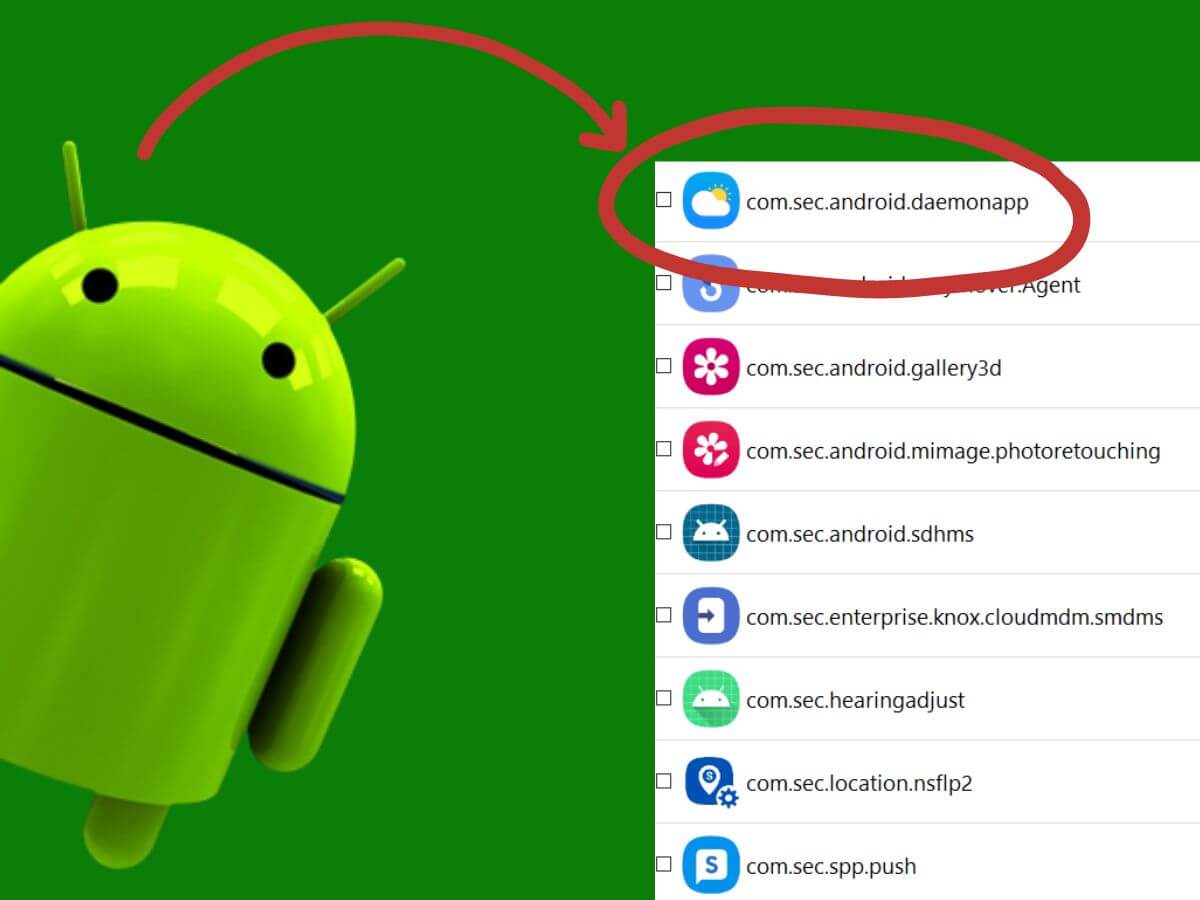
Most people who come across com.sec.android.daemonapp were not looking for it. It shows up in battery stats, storage breakdowns, or third-party apps that list running processes. The package name offers little context, and Samsung does not surface it in places most users normally check. That combination fills search results with guesses that stop short of a clear explanation.
What com.sec.android.daemonapp Really Is
com.sec.android.daemonapp is Samsung’s official weather package, registered and distributed under the name Samsung Weather. It runs on Android 11 and above and receives regular updates directly from Samsung.
The word “daemon” comes from Unix terminology for a background process that runs without direct user interaction. Samsung applied it here intentionally, because a core function of this package is exactly that: it retrieves weather data (with AccuWeather integration confirmed in the package manifest), syncs it with location data, and supplies it to Samsung system interfaces that display weather information, including widgets, the lock screen, and the Edge panel.
What makes this package unusual is that it contains both layers in a single APK: the background service that retrieves and caches weather data, and a full weather application with its own interface, settings, location management, and condition-specific screens. Samsung deliberately hides it from the app drawer, which is why you cannot find it by scrolling through your apps. The mechanism behind that and why it matters is covered in the next section.
Why You Cannot Find It in Your App Drawer
The package declares a launcher activity called AppLauncherActivity, but Samsung sets it to android:enabled="false" in the manifest. That single flag removes it from the app drawer while leaving everything else fully operational. The weather app screens, location selector, settings panel, and all widget surfaces remain accessible through the widget layer and internal system links.
This is not an accident or an oversight. It is how Samsung keeps system-level apps off the app drawer without removing their functionality. The same pattern appears across other Samsung system packages. The app is there. The entry point is suppressed.
Why the Same Package Shows Up Under Different Names
On older Samsung devices, this package served a much wider purpose. Samsung called it the Unified Daemon, and according to Samsung’s own support documentation, it supplied data for Weather, Yahoo Finance, Yahoo News, and other native Samsung content features, including the Alarm, S Planner, and camera apps. The package name com.sec.android.daemonapp carried all of those functions simultaneously.
Samsung restructured that system over time. News and finance functions moved to dedicated packages or were discontinued. The weather layer remained, and Samsung eventually consolidated the full Samsung Weather experience into this same package rather than splitting it into a separate app. The package name never changed through any of that evolution.
What did change is the display name, which varies depending on where you encounter it. System app managers show it as Unified Daemon or Weather Daemon. The APKMirror listing calls it Samsung Weather Widget. The Uptodown listing calls it Samsung Weather. Samsung’s own UK support page still refers to it as the Unified Daemon application. All of these names point to the same package, the same APK, the same process.
Is com.sec.android.daemonapp Safe
The package is safe. It ships pre-installed on Samsung devices, is signed with a Samsung certificate, and is distributed officially through Samsung’s update channels. It is not something introduced by a third-party app or a bad update.
Running the package through a static APK analysis confirms 50 declared permissions in total. Of those, 47 are classified as normal by Android, one is signature-level, one is special, and one is flagged as dangerous: android.permission.ACCESS_FINE_LOCATION.
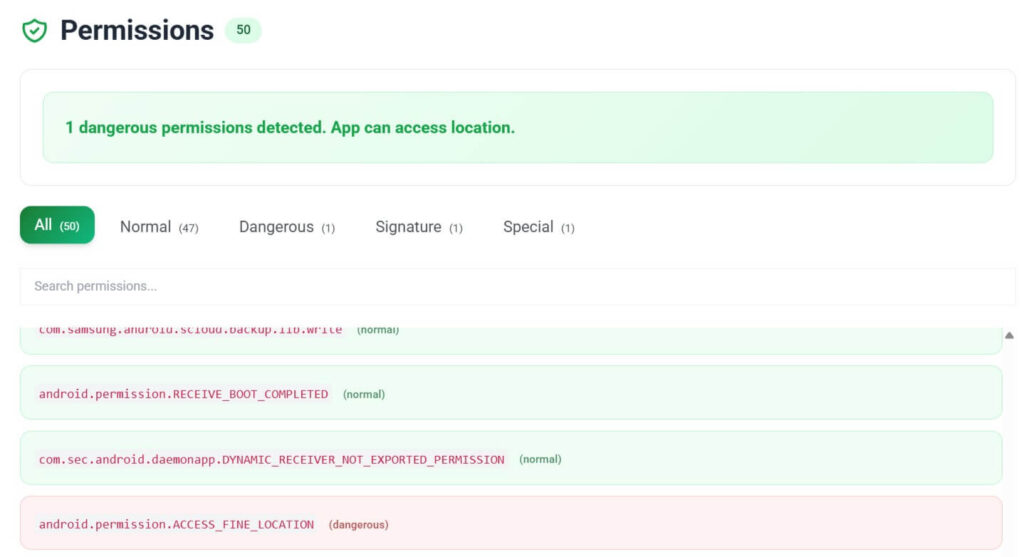
Static analysis reflects what the manifest declares, not necessarily what the package actively uses on a real device. On most Samsung devices, location handling for weather data is managed through the Samsung Weather interface rather than appearing as a direct permission request in your app settings.
The com.google.android.gms.permission.AD_ID permission is also declared, connecting the package to Google’s advertising identifier system, though Android classifies this as normal rather than sensitive.
Should You Disable It
The decision depends on which Samsung features you use. The weather widget, lock screen temperature, Edge panel weather, Samsung wearable weather complications, and any Samsung system interfaces that display weather information all depend on this package being active. Disabling it breaks all of those simultaneously.
If you use a third-party weather app and have no Samsung weather surfaces active, the package becomes overhead that runs periodic background syncs consuming minimal but non-zero memory and data.
Disabling through Settings is reversible. The package stays on the device, the associated features stop working, and re-enabling restores everything cleanly. Some users remove it using developer tools like ADB or debloater applications. Removing system apps this way carries real risk, as dependencies you cannot see can break, and recovery typically requires a factory reset.
This is not specific to this package. The same risk applies to core components such as com.android.systemui, ConfigAPK, and com.samsung.android.rubin.app, where removal can affect system stability or disable features that do not appear directly related.
How This Service Fails and What It Looks Like
When the package encounters an error, the weather widget is usually the first place users notice it. The widget stops refreshing, holds an outdated temperature permanently, displays an endless loading state, or shows a network error on a fully connected device.
A separate failure mode is the “Unfortunately, com.sec.android.daemonapp has stopped” message appearing on screen. This indicates the process has crashed during execution. It often resolves after clearing the app’s cache or restarting the device, which resets the package state and removes temporary data issues.
Battery drain follows a different pattern. It usually appears when the service keeps attempting to refresh weather data but does not complete the update successfully. This results in repeated background activity over a short period, which increases power usage. This behavior is often seen after system changes such as updates or resets, where permissions or background activity settings are not fully aligned with the service.
From the user side, the exact trigger is not always visible, but the pattern is consistent: failed refresh attempts lead to repeated activity and higher battery use.
How to Fix com.sec.android.daemonapp Errors
Clear the cache and data:
- Open Settings
- Go to Apps
- Tap the three-dot menu and select Show System Apps
- Search for Unified Daemon, Weather Daemon, or Samsung Weather
- Tap Storage
- Tap Clear Cache, then Clear Data (saved locations and widget preferences will be removed and need to be set again)
- Restart the device
Check location permissions:
- Open Settings
- Go to Apps, find Samsung Weather or Unified Daemon
- Tap Permissions
- Set Location to “Allow only while using the app” or “Always”
- Return to the home screen and allow the widget one to two minutes to refresh
Check battery optimization:
- Open Settings
- Go to Battery and Device Care, then Battery
- Tap Background Usage Limits or Sleeping Apps
- Confirm Samsung Weather and Unified Daemon are not listed as restricted
Reset the weather widget:
- Long press the weather widget and remove it
- Long press an empty area of the home screen
- Add the Samsung Weather widget again
- Allow it one to two minutes to establish a fresh data connection
Most errors clear after the cache step. If the problem returns, the battery optimization check is the next most likely cause.
What You Actually Need to Know Before You Touch It
The confusion around com.sec.android.daemonapp exists because Samsung never explains its system architecture to end users. The package name says nothing. The display name changes depending on which screen you are reading. And every existing article either stops at “it’s weather-related” or gets the architecture wrong by treating it as a background-only process with no interface.
The accurate picture is this: it is Samsung’s weather system in a single package, background service and full app interface together, with the app drawer entry deliberately disabled. It evolved from the old Unified Daemon that handled news and finance, retained the original package name through that transition, and is now actively maintained as Samsung’s primary weather infrastructure.
A package doing exactly what Samsung built it to do, hidden exactly where Samsung intended to put it, is not a problem. It just needed a straight explanation.